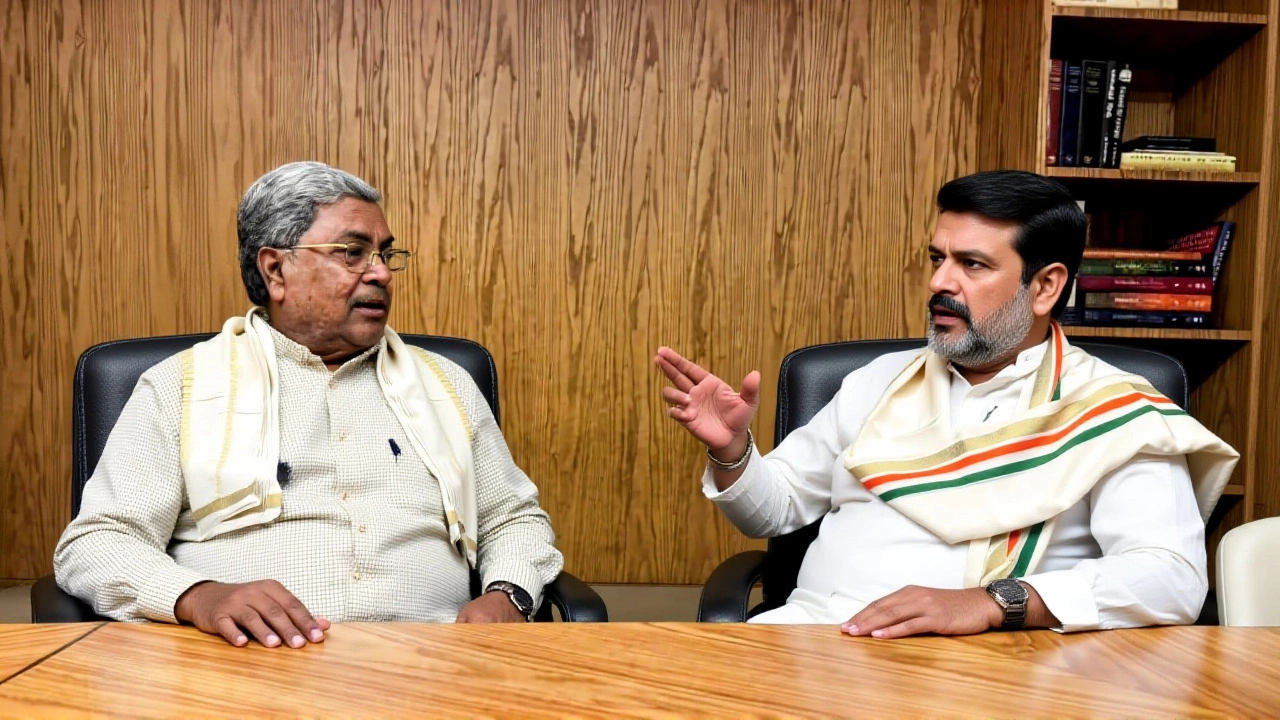
When Siddaramaiah, Chief Minister of Karnataka, arrived at Indira Bhavan in New Delhi yesterday, he expected a routine strategy session. Instead, he found himself waiting outside for hours while the party’s top brass locked themselves away for a two-hour closed-door meeting. The scene played out like a tense political drama: the state’s chief executive standing by, watching the doors stay shut.
The delay wasn’t just about scheduling conflicts. It signaled a deeper power play within the Indian National Congress. While Siddaramaiah and Deputy Chief Minister D.K. Shivakumar waited, Rahul Gandhi
Awaiting Audience at Party Headquarters
Here’s the thing about Indian politics: who gets seen first matters. Siddaramaiah and Shivakumar had traveled to Delhi specifically to discuss the growing unrest in their state unit. Reports indicate they were asked to wait outside while Rahul Gandhi held what sources describe as a “high-level” meeting with Ajay MakenK.C. VenugopalRandeep Surjewala
That initial meeting lasted approximately two hours. Two hours where the Karnataka leadership stood by, presumably aware that critical decisions regarding their state were being made without them present. When Siddaramaiah was finally called in, the session was short—just 30 minutes according to multiple reports. The contrast in time allocation speaks volumes about current dynamics within the party hierarchy. Oddly enough, this isn’t unusual behavior during crisis periods. But given the reported internal tensions in Karnataka Congress, the symbolism hit hard. Political observers noted the body language immediately: central leadership asserting control over state affairs, sidelining elected representatives temporarily to consolidate messaging. So what actually happened in those rooms? According to K.C. Venugopal
Venugopal stated clearly: "A major meeting has been held regarding Karnataka. Extensive discussions took place concerning the Rajya Sabha election and MLC election. Any other speculation being circulated is baseless and incorrect." His words were carefully chosen, designed to shut down rumors about potential leadership changes or cabinet reshuffles. But wait—the details remain fuzzy. No specific candidate names were announced. No concrete timelines shared. Just vague assurances that everything is under control. Meanwhile, political corridors buzzed with theories about whether Siddaramaiah’s position remains secure, especially with Shivakumar facing legal challenges elsewhere. To understand why this meeting mattered so much, you need context. Karnataka Congress has been navigating rough waters since taking power. Internal factions clash regularly. Legal troubles hang over key figures. And now, with crucial indirect elections approaching, every move feels amplified. The Rajya Sabha seat up for grabs carries national significance. Winning it strengthens the opposition’s presence in Parliament. Losing it weakens their negotiating position. Add MLC elections into the mix, and suddenly these aren’t just local issues—they’re strategic battles affecting the entire opposition alliance. Interestingly, similar scenarios have unfolded before. In 2019, ahead of general elections, Congress leaders faced comparable delays when seeking audiences with national coordinators. Back then, critics argued it reflected poor organizational structure. Today, some see it as deliberate centralization of power. Siddaramaiah hasn’t commented publicly on the wait times yet. Neither has Shivakumar. Their silence suggests either discipline—or discomfort. Either way, supporters back home are watching closely. Workers expect clarity on ticket distribution and campaign strategies. They don’t want ambiguity delivered via press statements from Delhi. Venugopal tried to reassure everyone. He dismissed rumors about leadership shakeups as “unfounded.” Yet his tone carried urgency. You could hear the effort to project stability even while acknowledging serious deliberations occurred. That balance act—calming nerves without revealing too much—is classic crisis management. Meanwhile, rival parties seized the moment. BJP spokespersons pointed to the long waits as evidence of disarray within Congress ranks. Regional outfits questioned whether field leaders truly influence decision-making anymore. All valid concerns, really, when your own CM sits outside for hours trying to get answers. According to insiders, following Siddaramaiah’s meeting, the same group planned another session with Deputy Chief Minister D.K. Shivakumar. Sources say both encounters aimed to align state leadership with central directives before finalizing election plans. Political analysts suggest several outcomes. First, candidate lists may emerge soon. Second, there could be subtle shifts in responsibility assignments. Third—and most importantly—the party needs to demonstrate unity publicly. If voters perceive infighting, turnout drops. If workers feel ignored, enthusiasm fades. The coming weeks will test how well Congress manages this delicate phase. Can they project strength despite internal complexities? Will Siddaramaiah retain full authority? Or will new arrangements quietly take shape behind closed doors like the ones at Indira Bhavan? This situation echoes earlier patterns in Indian coalition politics. States often serve as testing grounds for national strategies. Leaders learn quickly that loyalty counts more than tenure sometimes. Past examples show regional chiefs gaining prominence only when aligned perfectly with center. Deviation invites scrutiny. In 2018, similar meetings preceded major announcements about Andhra Pradesh and Telangana units. Those gatherings resulted in restructured committees and revised electoral approaches. Whether Karnataka follows suit remains uncertain. One thing is clear: patience won’t suffice forever. Actionable results must follow discussion. Siddaramaiah waited because Rahul Gandhi was engaged in a prior two-hour high-level meeting with senior Congress leaders including Ajay Maken and K.C. Venugopal. This preceding session discussed broader strategies related to Karnataka before Siddaramaiah was granted access for his own 30-minute consultation. Official statements confirm the main focus was on preparing for the upcoming Rajya Sabha election and Legislative Council (MLC) polls in Karnataka. Discussions likely included candidate selection, campaign coordination, and addressing internal party disagreements ahead of these critical contests. Congress spokesperson K.C. Venugopal explicitly denied such claims, calling them baseless and incorrect. However, the extended duration of preliminary meetings fueled speculation among political observers about possible structural adjustments within the state unit. Direct impact depends on election outcomes. Clear leadership signals boost voter confidence. Confusion or perceived instability might suppress turnout. Ultimately, policy continuity versus change hinges on whether current administration maintains cohesive direction post-meetings. No specific date has been provided. Typically, parties release formal communication regarding candidates and strategy within days following such consultations. Watch for press releases from Congress headquarters in Bengaluru or Delhi over the next week for definitive updates.What Was Discussed Behind Closed Doors?
The Bigger Picture: Karnataka's Political Turmoil
Reactions From Stakeholders
What Happens Next?
Historical Context: Leadership Dynamics
Frequently Asked Questions
Why did Siddaramaiah have to wait so long?
What topics were covered in the closed-door meetings?
Is there truth to rumors about leadership changes?
How does this affect ordinary voters in Karnataka?
When can we expect official announcements?