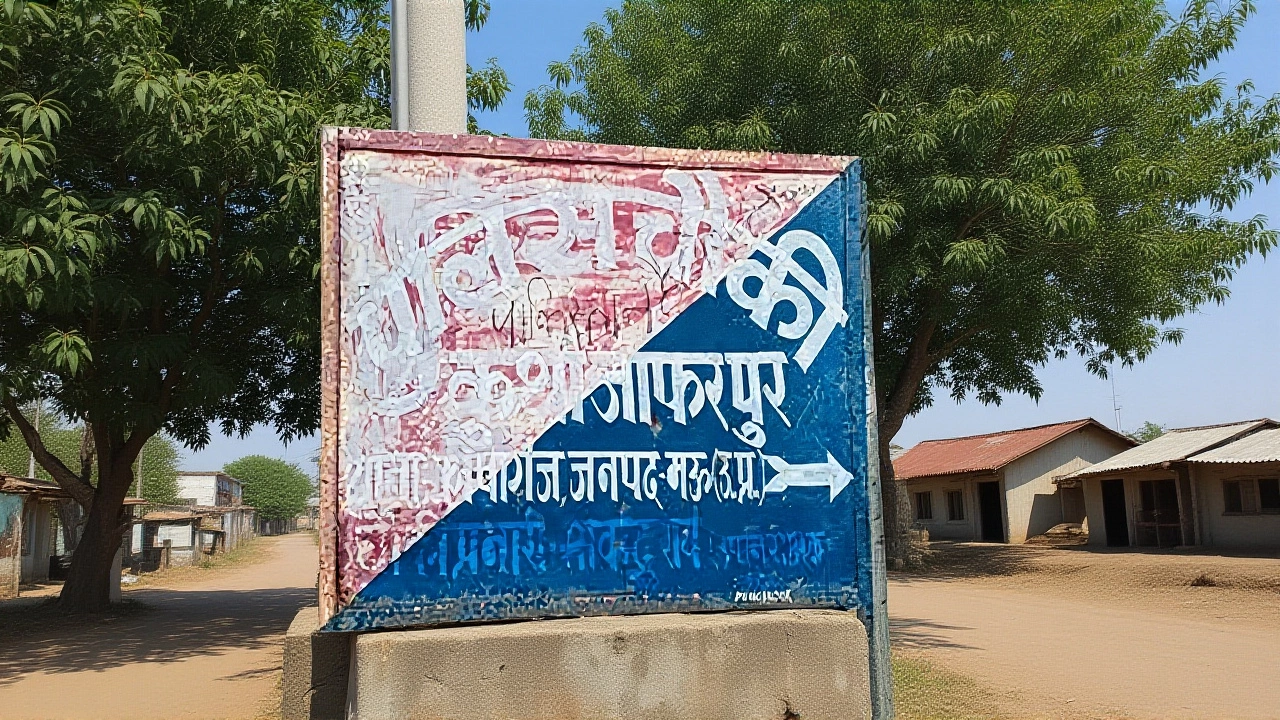
It started with a simple morning patrol. But what officers found at the Kurthi Jafarpur police outpost in Mau district, Uttar Pradesh, turned routine duty into chaos. Someone had scrawled "Pakistan Hai" (This is Pakistan) across the official signboard of the functioning police post. The act wasn't just vandalism; it was a direct challenge to state authority that sparked immediate panic among locals and officials alike.
The incident, which came to light recently, has triggered a formal investigation by the local authorities. While the exact time of the defacement remains unclear, the discovery happened fast enough to catch the administration off guard. Here’s the thing: this isn’t just about paint on metal. In a region sensitive to communal tensions and border politics, altering a police symbol to claim allegiance to a neighboring country is a serious provocation.
A Symbol Under Attack
The Kurthi Jafarpur outpost falls under the jurisdiction of the Kopaganj Police Station. For years, this small outpost has served as a visible reminder of law enforcement presence in the area. When an unidentified miscreant—described in reports as a "shararti tatva" or mischievous element—defaced the board, they didn’t just damage property. They attacked the symbolism of the state itself.
Residents reported seeing the graffiti early in the day. The phrase "Pakistan Hai" was written in bold, unmistakable letters. It’s a provocative statement, especially given the historical context of India-Pakistan relations. Locals were understandably alarmed. Some feared it could be a prelude to larger unrest. Others saw it as a desperate attempt by fringe elements to make noise. Either way, the commotion was real.
"We’ve never seen anything like this," said one resident who asked not to be named. "A police post is supposed to be safe. To see it marked like that... it sends a chill down your spine."
Investigation Begins Amidst Tensions
Authorities moved quickly. An investigation has been launched to identify those responsible. Police are reviewing CCTV footage from nearby shops and homes. They’re also questioning local youth and known agitators. No arrests have been made yet, but sources say several suspects are being monitored.
The lack of specific details—no names, no dates, no FIR number cited publicly—adds to the mystery. Was this a lone actor? A coordinated group? Political activists? Religious extremists? The answers aren’t clear yet. What is clear is the urgency. The Uttar Pradesh Police cannot afford to let such incidents slide. If left unchecked, similar acts could spread.
This isn’t the first time Mau has made headlines for law-and-order issues. Just months ago, the district witnessed heavy unrest after a stabbing incident led to a crowd attacking police personnel. That episode ended with dozens injured and curfews imposed. Now, with this new development, fears are rising again.
Context Matters: Why This Hurts
To understand why this caused such a stir, you need to look at the broader picture. Uttar Pradesh is a politically volatile state. Elections are always around the corner. Sentiment swings wildly based on national events. Any gesture perceived as anti-national or pro-Pakistan is treated with extreme seriousness.
In recent years, social media has amplified minor incidents into major controversies. A single photo of a defaced sign can go viral within hours. That’s likely what happened here. Images of the "Pakistan Hai" graffiti circulated online, drawing attention from journalists, politicians, and netizens alike.
Experts warn that such acts often serve as triggers. They test the resolve of local administration. They gauge public reaction. And sometimes, they escalate into larger conflicts. "Vandalism is rarely random," notes a security analyst based in Lucknow. "It’s usually symbolic. It’s meant to provoke. And if handled poorly, it can backfire."
The irony? The very people who wrote "Pakistan Hai" might not even believe in Pakistan. They might just want to cause trouble. Or gain visibility. Or settle a local score. But the impact doesn’t change because of the motive. The damage is done.
What Happens Next?
For now, the focus is on containment. Police are increasing patrols in the area. Local leaders are holding meetings to calm tensions. Schools and colleges have been advised to remain vigilant. There’s no sign of widespread violence yet, but the threat level is elevated.
If the culprits are caught, they’ll face charges under multiple sections of the Indian Penal Code. These include criminal mischief, outraging religious feelings, and potentially sedition depending on how prosecutors frame it. Sentences can range from months to years in prison.
But beyond punishment, there’s a bigger question: How do we prevent this next time? Better surveillance? Community engagement? Stronger messaging against hate speech? These are debates that will continue long after the paint is washed off the sign.
Frequently Asked Questions
Who wrote "Pakistan Hai" on the police outpost sign?
The identity of the person or group responsible remains unknown. Authorities refer to them only as an "unidentified mischievous element." Police are currently reviewing CCTV footage and questioning suspects, but no arrests have been confirmed as of the latest reports.
Where exactly did this incident take place?
The incident occurred at the Kurthi Jafarpur police outpost, located in Mau district, Uttar Pradesh. This outpost operates under the administrative jurisdiction of the Kopaganj Police Station, which handles law-and-order matters for the surrounding area.
Why is this considered a serious offense?
Defacing a government symbol like a police signboard is illegal under Indian law. Writing "Pakistan Hai" is viewed as a provocative act that challenges national sovereignty and could incite communal tension. Given the sensitive nature of India-Pakistan relations, such gestures are treated as threats to public order.
Has there been any violence linked to this incident?
No physical violence has been reported directly connected to the graffiti incident. However, the discovery caused significant alarm and commotion among residents and officials. Authorities are maintaining a heightened security posture to prevent any potential escalation.
Is this related to previous unrest in Mau?
While Mau has experienced prior law-and-order issues, including a separate incident involving a stabbing and crowd attacks on police, there is no direct evidence linking those events to this graffiti case. Each incident is being investigated independently, though both highlight ongoing challenges in maintaining peace in the region.
What legal action can be taken against the perpetrators?
If identified, the individuals could face charges under various sections of the Indian Penal Code, including criminal mischief (Section 427), outraging religious sentiments (Section 295A), and potentially sedition (Section 124A) if deemed to threaten public order. Penalties vary but can include imprisonment and fines.